

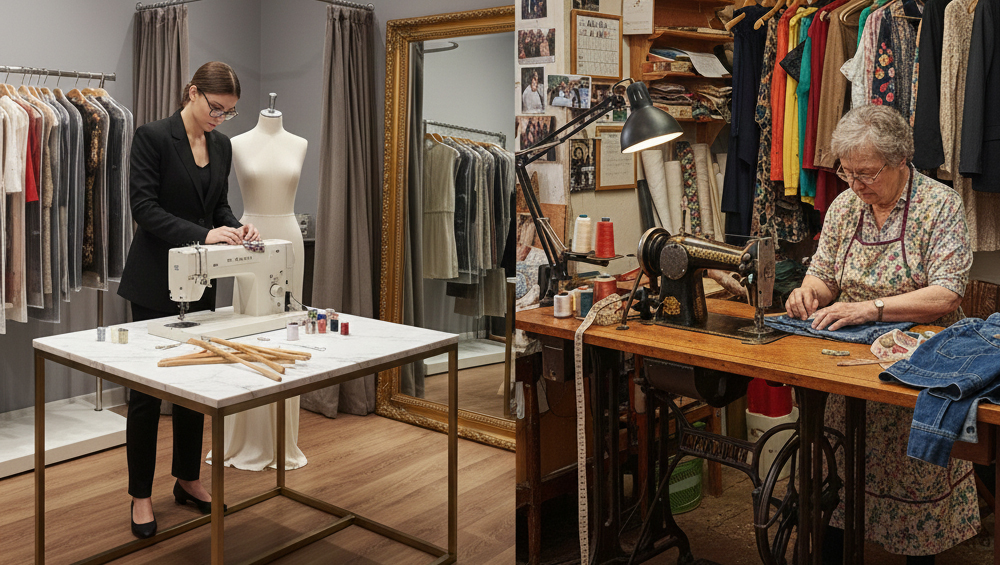
How Altering Designer Brand Garments
Differs From General Alteration Shops
Designer brand garments often have internal construction unlike ordinary ready-to-wear pieces. Using the same standard technique on every garment can unknowingly destroy the structure the brand intentionally built in.
This article is part of the Expert Dress Alteration Knowledge Center. Many people assume that altering clothing is a single skill that applies equally to every garment. In reality, designer brand garments often have internal construction significantly different from ordinary ready-to-wear pieces. Using the same standard technique regardless of that difference can unknowingly destroy the structure the brand intentionally built in. This article explains what those differences are, and why altering designer brand garments requires specialized expertise.
When a Designer Blazer Lost the Shape It Was Built For
A client brought a designer brand blazer to a general tailor shop to have the size taken in for a closer fit. After picking it up, she noticed the jacket’s once-crisp, structured shape had become loose and formless — even though the overall size had been adjusted correctly as requested.
When our team at Mallika ThaiDress examined it, we found the original shop had used a standard alteration technique intended for ordinary ready-to-wear garments, without accounting for the fact that this designer blazer had a hand-sewn canvas layer built into its internal structure — a technique the brand used specifically to give the jacket a naturally fitted shape along the body. Adjusting the size without unpicking and repositioning that canvas layer to match the new size distorted the internal structure, and the jacket lost the shape it was built for. Our team had to unpick the original structure and reposition the canvas layer correctly to match the corrected size, in order to restore the jacket’s original shape — a clear example that designer brand garments have internal construction different from ordinary clothing, and altering them with standard technique without understanding that specific structure can destroy the very thing that gave the garment its value in the first place.
Why Designer Brand Garment Construction Differs From Ordinary Clothing
The concept of bespoke tailoring (see general background on bespoke tailoring for further reading) helps explain why high-end designer brand garments often have construction methods different from ordinary ready-to-wear pieces:
- Designer garments often have more complex internal structural layers — such as hand-sewn canvas reinforcement, multiple lining layers, or specific reinforcement techniques not visible from the outside, but with a significant effect on the garment’s shape and drape
- Certain seams are hand-sewn rather than machine-sewn — especially points needing natural flexibility following the body’s movement; correcting these requires specialized skill without destroying that property
- General alteration shops usually aren’t trained to recognize this construction — since most of the work a general shop handles is ordinary ready-to-wear without this level of complexity, they usually default to the same standard technique for every garment without checking for a difference first
- Alteration that ignores this specific structure can destroy the garment’s value — part of a designer garment’s value comes from its craftsmanship and specific construction technique. An alteration that damages this structure affects both appearance and the garment’s genuine value
This understanding shows that altering a designer brand garment isn’t just about adjusting size for a better fit — it requires understanding and preserving the specific structure the brand intentionally built, which requires expertise different from ordinary garment alteration.
How to Check Whether Your Designer Garment Has Special Structure
Before deciding which shop to use, check in this sequence:
Ask about or examine whether the garment has an internal reinforcement layer
Blazers or dresses with a particularly fitted shape often have hidden internal reinforcement structure — check before deciding to alter.
Notice whether the shop you’d use has specific experience with designer brand garments
A shop with genuine experience with designer garments usually asks in-depth questions about the structure before taking on the job, rather than agreeing immediately.
Ask how the shop will handle the internal structure when adjusting size
If a canvas layer or reinforcement structure is present, ask how they plan to reposition it to match the new size.
Don’t decide based on lower price alone
Altering a designer garment with complex structure needs more time and skill than ordinary alteration work. An unusually low price may reflect a shop using standard technique unsuited to the piece.
When a General Alteration Shop Is Enough, and When to Choose a Specialist
Use this framework to decide whether you need a shop with specialized expertise:
✅ A general alteration shop may be enough
- It’s an ordinary ready-to-wear garment without complex reinforcement structure
- The alteration is basic work, such as hemming trousers or a skirt
- No canvas layer or hand-sewn technique is present internally
⚠️ Should choose a shop with specialized expertise
- It’s a blazer, dress, or garment with a particularly fitted shape
- You suspect or know internal reinforcement structure is present
- You need a size adjustment large enough to affect the existing structure
- The garment carries high value, both in price and personal meaning
A simple rule that always applies: the more complex a garment’s internal structure, the more you should choose a shop with specific expertise in designer brand garments, because technique differences directly affect the piece’s shape and value.
What Happens When a Designer Garment Is Altered With Ordinary Technique
Altering a designer brand garment with the same technique used for ordinary ready-to-wear clothing usually leads to problems that are hard to detect at first:
- The garment’s shape may change from what the brand intentionally designed, even when the overall size fits better as requested
- Internal reinforcement structure disturbed without being correctly repositioned may cause the garment to hang abnormally or lose shape with repeated wear
- A designer garment’s value may drop significantly if the specific structure that was part of its worth is destroyed
- In the most severe cases, restoring the garment may require unpicking the entire structure and rebuilding it, at higher cost and risk than choosing the right shop from the start
“What can’t be seen from the outside is usually what sets a designer garment apart.” — Mallika Thaidress
Mallika ThaiDress’s Standard for Caring for Designer Brand Garments
When taking on an alteration job for a designer brand garment, our team always follows this sequence:
Examine the whole garment’s internal structure before starting
Identify where a canvas layer, lining, or hand-sewn technique is present, before planning the alteration approach.
Choose a technique consistent with that garment’s original construction
Never use the same standard technique on every piece regardless of the differences — adapt to the specific structure found.
Reposition reinforcement structure to match the new size
When adjusting size, examine and reposition canvas layers or reinforcement structure to match, not just adjust the outer seams.
Examine the whole garment’s shape and drape after finishing
Confirm the shape the brand intentionally built remains intact after the alteration, not just that the size fits.
Mallika Thaidress’s Decision-Making Principle
Mallika Thaidress holds that garment alteration work should not begin with the question “can this be altered?” alone, but must start by assessing “would this alteration be safe for the structure, materials, silhouette, and value of the garment?”
When the risk of an alteration outweighs its benefit, recommending against it — or pausing to assess further — is just as much a part of professional standards as carrying out the work itself.
How Altering Designer Brand Garments Differs From General Alteration Shops — Frequently Asked Questions
Why do designer brand garments need different technique from ordinary clothing?
Because designer garments often have more complex internal structure, such as a hand-sewn canvas reinforcement layer, which isn’t visible externally but has a significant effect on the garment’s shape. Using standard technique without unpicking and repositioning that structure can destroy the shape the brand intentionally built.
Does every designer brand garment have special reinforcement structure?
Not every piece. It depends on the type of garment and that brand’s manufacturing technique. Blazers or dresses with a particularly fitted shape usually have more reinforcement structure than casual wear. Check or ask a specialist before deciding.
How do I know whether the shop I’ve chosen genuinely has expertise with designer brand garments?
A shop with genuine expertise usually asks in-depth questions about the garment’s structure before taking on the job, and can explain how they’ll handle the internal structure when adjusting size, rather than agreeing immediately without examination.
How does the cost of altering a designer brand garment differ from ordinary alteration work?
It usually differs significantly, since it requires time to examine the internal structure and specialized skill beyond ordinary ready-to-wear alteration. Ask for a clear price after a specialist has examined the genuine structure.
If my designer brand garment was already altered by a general shop, can it still be corrected?
It depends on the degree of damage to the original structure. In many cases a specialist can unpick and reposition the structure to restore the original shape, but should examine and assess each case individually, since some types of damage may only be partially correctable.
Have a Designer Brand Garment
That Needs Altering the Right Way?
Send us photos for a free assessment before deciding. We always examine the internal structure first, to preserve the shape and value the brand intentionally built.
📌 Woon Khiaozen Designer
Free consultation on garment repair and alteration · We reply every day