When a Hair Dryer
Melted a Down Jacket
A diagnosis and repair record of a heat-damaged down jacket, by the Mallika Thaidress repair team
A Burn, Not a Tear
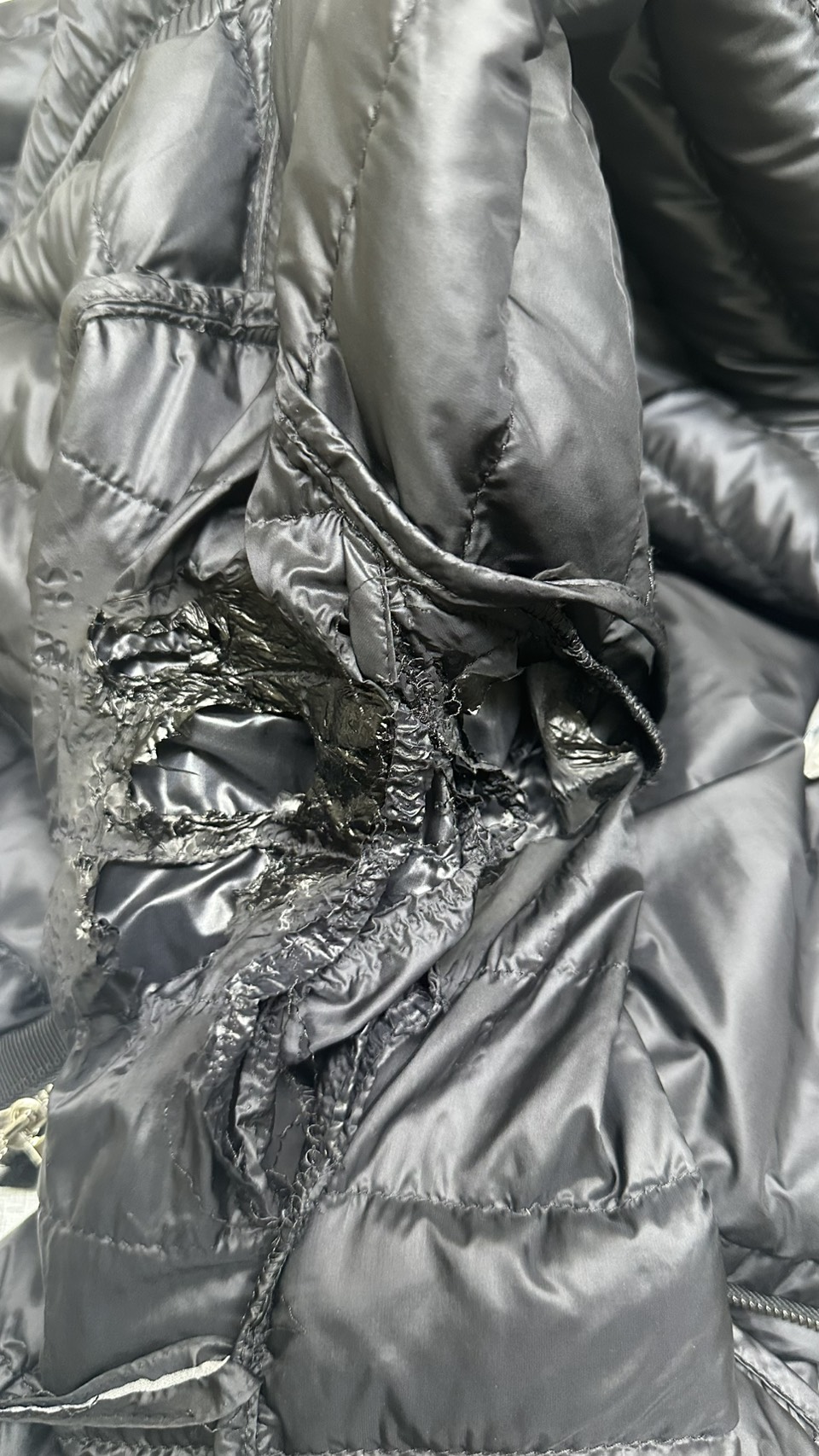
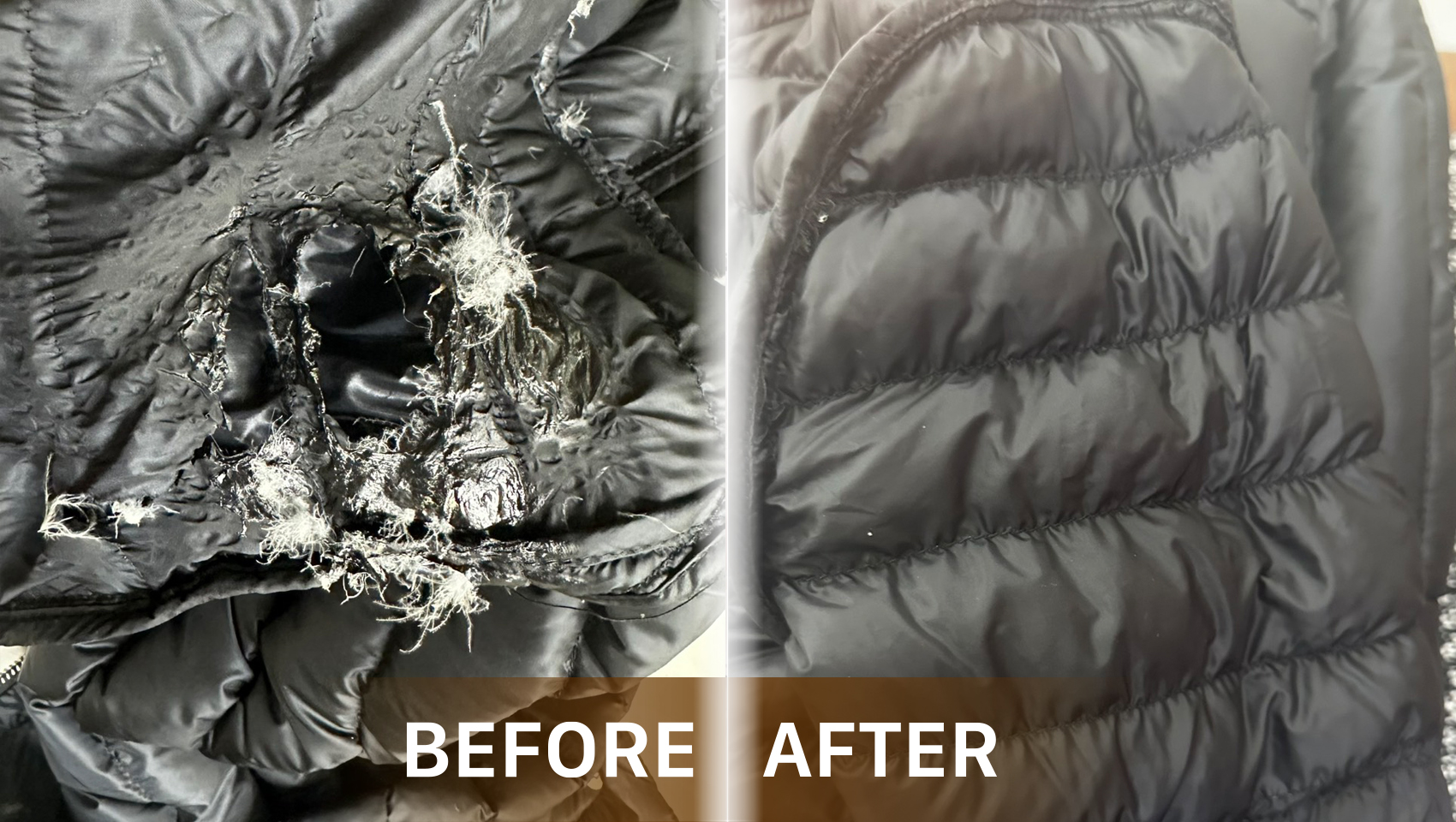
This black down jacket arrived with damage across the shoulder and seam line — but the marks weren’t a typical tear from a sharp object or friction. They were melt damage: the fabric had shrunk, stiffened, and taken on a glossy, plastic-like sheen, with fibers fraying around the edge of the hole. These are the telltale signs that heat, not wear, caused the damage.
The cause was a hair dryer held too close to the jacket.Heat from a hair dryer, particularly when directed closely and continuously at the fabric, can cause some nylon or polyester shell fabrics to shrink, deform, or partially melt. The extent of damage depends on the actual temperature, distance from the fabric, exposure time, and the specific fiber and coating construction. — just a few seconds is enough to melt straight through the jacket’s glossy nylon shell.
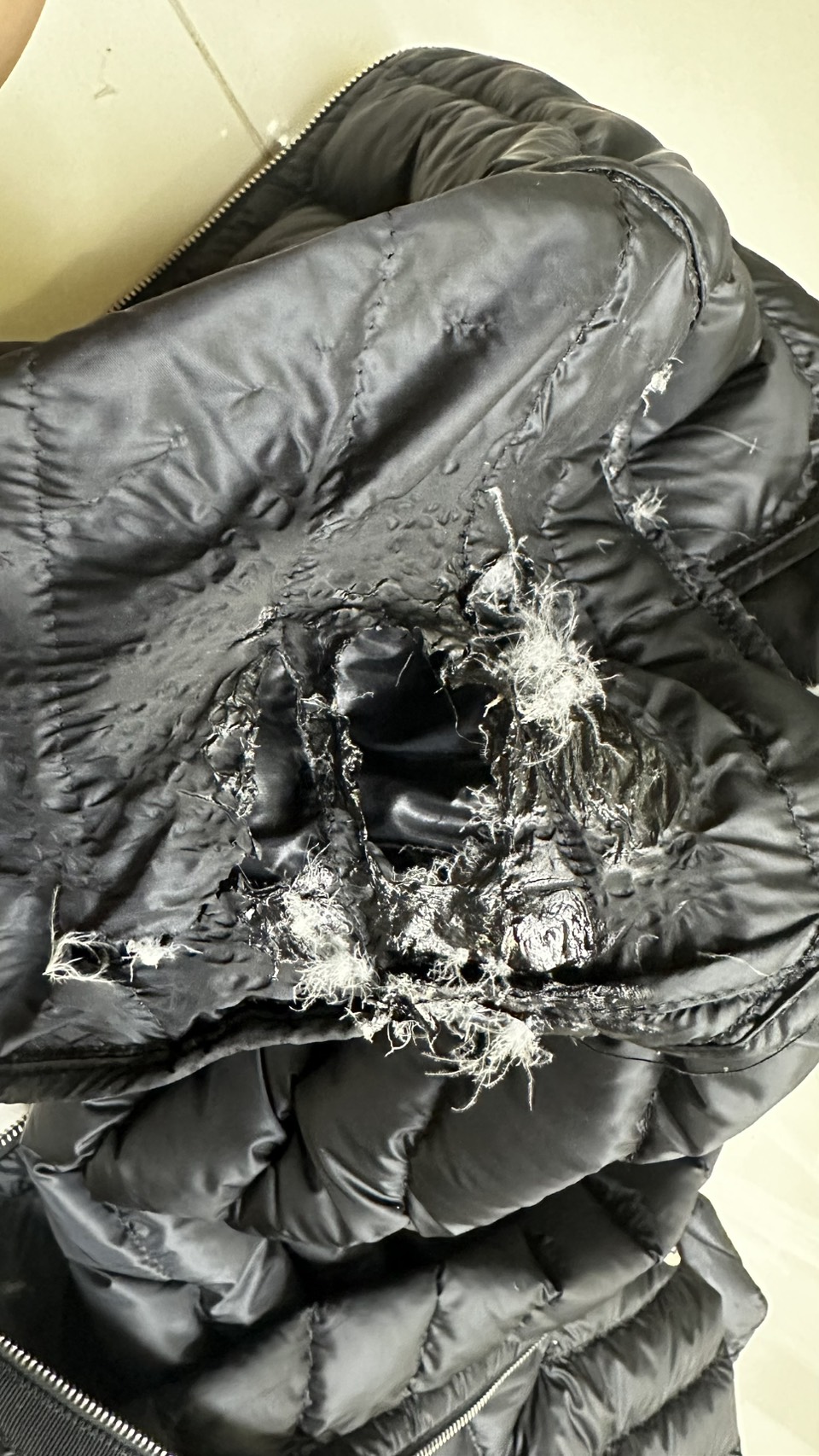
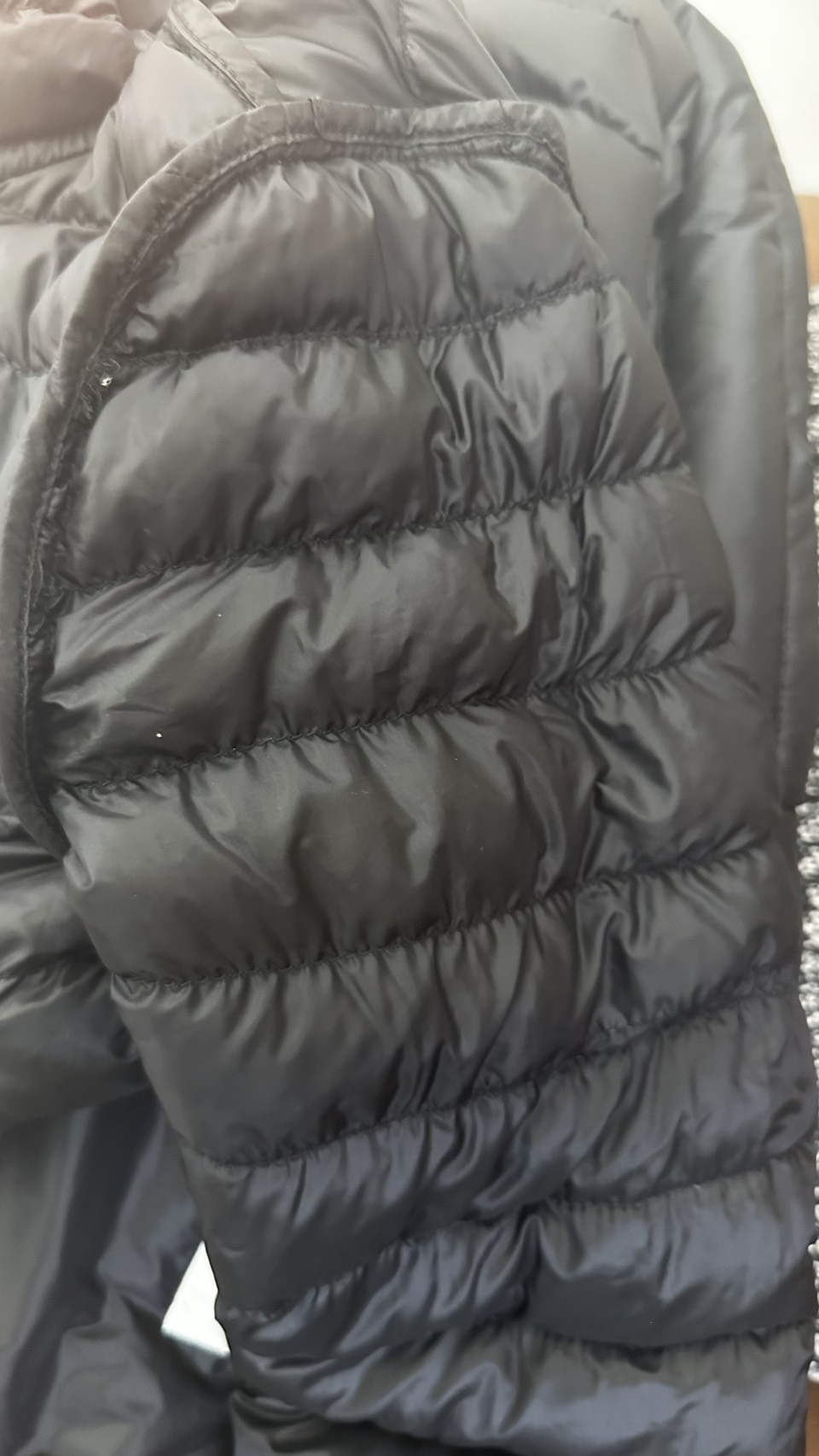
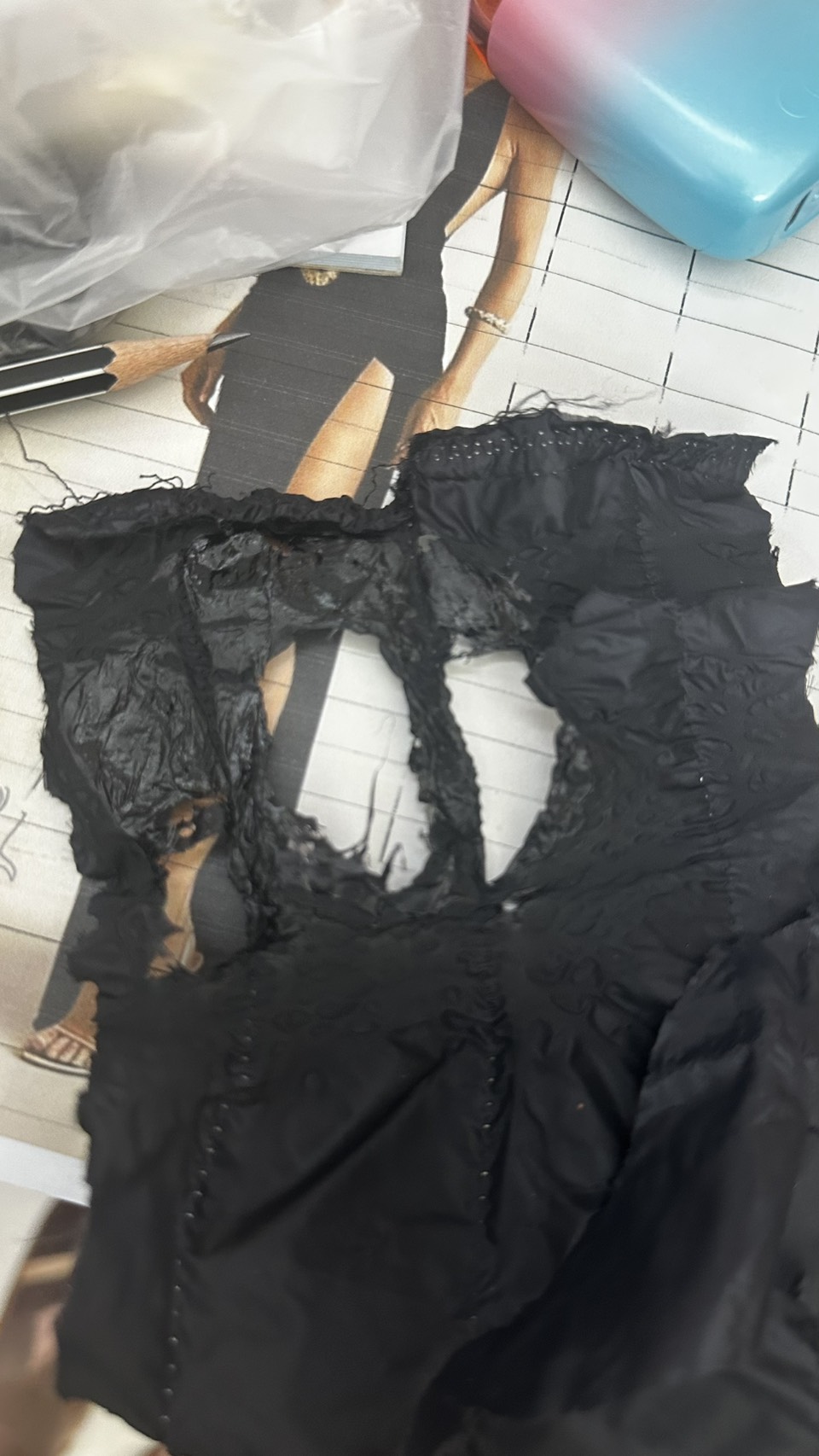
Photos taken during the initial assessment — the melted shoulder (left), the full jacket, and a piece of fabric that came away from the damaged area.
Why This Fabric Is So Sensitive to Heat
- Glossy nylon/polyester shell fabric has a much lower melting point than cotton or wool.
- Once melted, more heat — like ironing — only makes it worse: the hole widens and damage spreads to the surrounding fabric.
- As the hole grows, down feathers escape through it, so the jacket loses both warmth and its original shape.
Pre-Repair Assessment Criteria
Before telling a client whether a jacket can be repaired or needs further discussion, our team follows this sequence every time — so the answer reflects the garment’s actual condition, not a quick visual guess.
Measure the size and depth of the damage
Check whether the melt goes through to the inner layer or is only surface-level, and how wide it is relative to the baffle width.
Examine the fabric surrounding the damage
Test the flexibility of the nearby fabric to see whether heat has spread and started to stiffen or embrittle it.
Check the position relative to main seams
Assess whether the damage sits on a load-bearing point (elbow, shoulder, underarm) or a safer area.
Estimate how much down has already been lost
Gauge how much down has escaped, to calculate how much needs to be refilled to restore the original loft.
Summarize findings and inform the client before starting
Combine the results of the four checks above and tell the client honestly whether the jacket meets the criteria for a safe repair, or needs further discussion first.
Repairable — Or Should You Pause First?
Not every melt mark can be restored to its original state. Based on the five checks above, our team gives clients a clear picture using this framework.
✅ Signs It’s Safe to Repair
- The melt is small to medium, no more than 2–3 cm
- It’s not on a main seam or load-bearing point
- Surrounding fabric hasn’t stiffened or become brittle
- The neighboring baffle structure is still intact
⚠️ Consult Before Deciding
- The melt spans across multiple baffle channels
- It’s in a highly visible spot, such as the center of the chest
- Surrounding fabric has started to feel brittle or tears easily to the touch
- A significant amount of down has already escaped before repair
What to Prepare Before Sending Your Jacket for Assessment
- Take photos of the damage in good lighting, both close-up and wider shots
- Note the location on the jacket (shoulder / sleeve / chest, etc.)
- Mention the brand and material if known, to help match patch fabric more accurately
- Note what type of heat caused it (hair dryer, iron, stove, etc.)
Assessing against this framework helps clients decide faster, and lets our team give an honest answer before starting work — not a risk disclosure after the fact.
“Designer down jackets look tough, but they’re actually far more vulnerable to heat than most people realize.” — Mallika Thaidress technical repair team
Repairing Heat Damage While Preserving the Original Structure
Repairing heat-damaged technical fabric takes specialized skill — the fix can’t rely on more heat, and the jacket’s original baffle lines need to stay seamless. Here’s how our team approaches it, step by step:
Match the fabric and original color
We select a patch fabric that’s as close as possible in sheen, texture, and shade to the jacket’s black.
Trim the stiffened, melted edges
This prevents the hardened edge from rubbing against surrounding fabric and causing further damage.
Hand-sew a concealed patch along the baffle
The new seam follows the jacket’s original quilted lines so the repair blends in rather than standing out.
Refill lost down or synthetic insulation
We restore the loft to match the surrounding panels, bringing back both warmth and shape.
Final quality check
We inspect seam strength and overall shape before the jacket goes back to the customer.
Frequently Asked Questions About Down Jacket Repair
My down jacket has a melted hole from a hair dryer — can it really be fixed?
Yes, as long as the damage hasn’t spread too far across the baffle structure. Our team trims the hardened edges, patches with closely matched fabric, hand-sews along the original quilted lines, and refills lost down or synthetic fill. The jacket returns to normal use afterward.
Will the repair be visible?
It depends on the size and location of the damage. We choose fabric that closely matches the color and sheen, and sew along the original seam lines to blend in as much as possible. For very large or highly visible damage — like the center of the chest — some trace may remain, and we’ll always flag this before starting work.
How long does a repair take?
Small to medium melt damage typically takes about 3–7 business days, depending on complexity and current workload. For urgent cases, let us know in advance so we can prioritize your queue.
How much does it cost?
Price depends on the size of the damage, its location on the jacket, and how difficult the concealed stitching will be. We recommend sending photos first so our team can quote based on the actual condition of your jacket.
Do you repair other brands besides Moncler — like Canada Goose, The North Face, or Uniqlo?
Yes. We repair down jackets and technical outerwear from any brand, not just Moncler — heat-melted nylon or polyester shell fabric is a shared vulnerability across this entire category of jacket.
Your Favorite Jacket
Doesn’t Have to Be Replaced
We repair down jackets and designer outerwear damaged by heat, burns, or tears — by a team specialized in technical fabric repair.
Contact Woon Khiaozen · Mallika Thaidress
Free consultation on garment repair · mallikathaidress.com · We reply every day