

Mallika ThaiDress’s
Structural Work Standard
Every principle covered in earlier articles comes together into one systematic inspection process, so that every dress’s structure meets the same standard on delivery, every time.
This article is part of the knowledge cluster under How to Alter a Wedding Dress Without Ruining Its Structure. Earlier articles covered storage, specialized techniques, and the limits of structural modification; this one brings it all together into a systematic working standard our team follows for every dress that comes through the door.
When a Second Inspection Caught an Issue Before Delivery
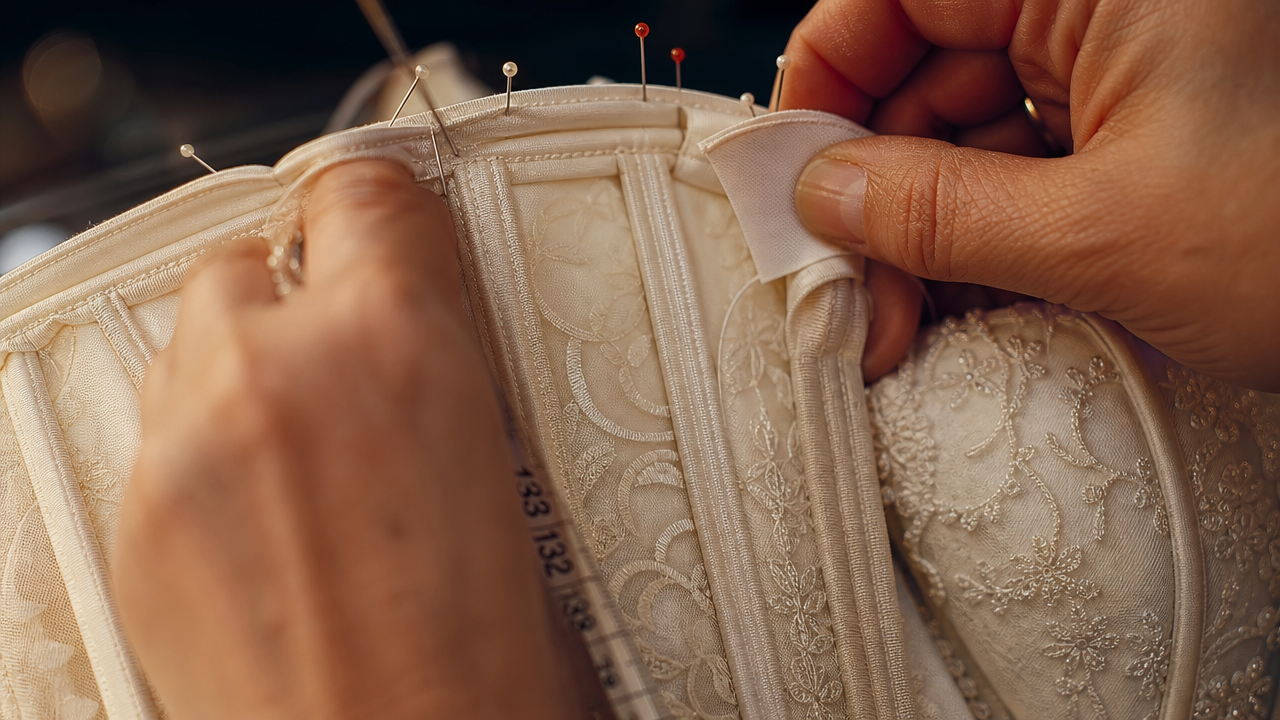
A mermaid wedding dress had its waist alteration completed through the normal process. The tailor was confident every boning strip had been sewn back into place. But during the second inspection required by our shop’s standard — performed by a different person — one boning strip was found not fully secured at its lower end, a point that would have been almost impossible to notice from the outside with the naked eye.
Without that second inspection, the loose end of that boning strip could have worked its way out after just a few wears, damaging the fabric and causing real discomfort on the most important day. This was caught only because our standard requires every job affecting structure to pass through a second inspector, no matter how confident the first tailor is.
The Components of a Structural Quality Control Standard
Quality control principles used across general manufacturing (see general background on quality control for further reading) have been adapted into a specialized form for wedding dress alteration:
- Pre-Alteration Documentation — photographing and recording boning positions, lining, and all risk points before work begins, as a reference to compare against the result later
- Structural Checklist — a standard list of points to check every time after altering, such as boning tightness, silhouette symmetry, and seam strength
- Dual Inspection — every job affecting structure must pass in front of a second inspector, not the tailor who did the work, before it’s considered complete
- Wear Simulation — having the client try the dress on and move naturally, not just inspecting it while hanging still
This standard exists to catch mistakes that a single set of eyes might overlook — no matter how experienced a tailor is, every human makes mistakes. The inspection system exists to minimize that possibility as much as possible.
How to Tell If a Shop Has a Real Quality Control Standard
Before handing your dress to any shop, watch for these signs:
Ask whether the dress’s condition is documented before alteration
A shop with a real standard will have photos or records of the original condition to compare against — not just memory.
Ask who does the final inspection
If the answer is the same tailor who did the alteration checking their own work, that’s a sign there’s no real second-inspection system.
Notice whether you’re asked to try the dress on before taking it home
Inspecting only while the dress hangs still isn’t enough — real movement testing confirms the structure genuinely holds up.
Ask to see the checklist the shop actually uses
A shop with a real systematic standard can explain its inspection steps clearly, not just say vaguely, “we’re very thorough.”
Signs of a Trustworthy Standard vs. Signs to Watch For
Use this framework to assess whether a shop you’re considering has a genuinely trustworthy quality control standard:
✅ Signs of a trustworthy standard
- Documentation or photos recording the dress’s condition before alteration
- The final inspector is a different person from the tailor who did the work
- You’re asked to try the dress on before taking it home
- They can explain the inspection process clearly and systematically
⚠️ Signs to watch for
- No documentation of the dress’s condition before alteration at all
- The same tailor both does the alteration and the final inspection
- The dress is handed back without an opportunity to try it on first
- Vague answers about the inspection process, with no real detail
A simple rule that always applies: a genuine standard can be explained as tangible steps, not just a vague promise that “we care about every detail.”
What Happens Without a Real Inspection System
When a shop has no systematic quality control standard, small mistakes often slip through all the way to the client:
- An imperfectly finished point, like boning that hasn’t been secured, may go unnoticed until it’s actually worn on the wedding day
- With no reference of the original condition, there’s no clear evidence if a dispute over damage arises later
- A mistake that should have been caught in the shop instead becomes an emergency fix needed close to the wedding date
- Client trust erodes, no matter how skilled the tailor is, if there’s no inspection system to back it up
“Good skill needs a good inspection system to back it up — not reliance on one person’s confidence alone.” — Mallika Thaidress
Mallika ThaiDress’s Structural Quality Control Standard
For every job affecting a wedding dress’s structure, our team always follows this sequence:
Document the structural condition before any work begins
Photograph and record boning positions, lining, and any risk points, kept as reference material.
Work according to a clearly defined checklist
Every step affecting structure must pass through the standard checkpoints — no step is skipped, however minor it looks.
Have a second inspector check the work before it’s considered done
The tailor who did the alteration is never the sole judge of whether the work is complete — a second set of eyes is always required.
Test the actual fit before final delivery
Have the client try on and move naturally, confirming the altered structure genuinely holds up to real use with confidence.
Mallika Thaidress’s Decision-Making Principle
Mallika Thaidress holds that garment alteration work should not begin with the question “can this be altered?” alone, but must start by assessing “would this alteration be safe for the structure, materials, silhouette, and value of the garment?”
When the risk of an alteration outweighs its benefit, recommending against it — or pausing to assess further — is just as much a part of professional standards as carrying out the work itself.
Mallika ThaiDress’s Structural Work Standard — Frequently Asked Questions
Why is a second inspector needed if the first tailor is already highly experienced?
Because no matter how experienced someone is, every human makes mistakes, especially at small points a single set of eyes might overlook. A second inspector reduces the chance of an error slipping through to the client.
Why does trying the dress on matter, rather than just checking it while hanging?
Because some structural points can look normal while the dress hangs still, but show a problem once it carries weight and moves naturally. A wear test confirms the structure genuinely holds up to real use.
What’s the purpose of documenting the dress’s condition before alteration?
It serves as a reference to compare the result against afterward, and as clear evidence if any question arises about the dress’s condition later.
How is a single tailor checking their own work different from a real dual-inspection system?
The person who did the work often has a bias from familiarity with their own job, making small mistakes easier to overlook than for someone looking at it with fresh eyes. A second inspector reduces this risk.
How can a client tell if a shop genuinely follows this kind of standard?
Ask directly who does the final inspection, whether the dress’s condition is documented before alteration, and whether you’ll get to try it on before taking it home. A shop with a real standard will answer these clearly.
Want to Know What Standard
Your Dress Will Be Checked Against?
Send us photos for a free assessment before deciding. We’ll explain the inspection process that will apply to your dress clearly.
📌 Woon Khiaozen Designer
Free consultation on garment repair and alteration · We reply every day